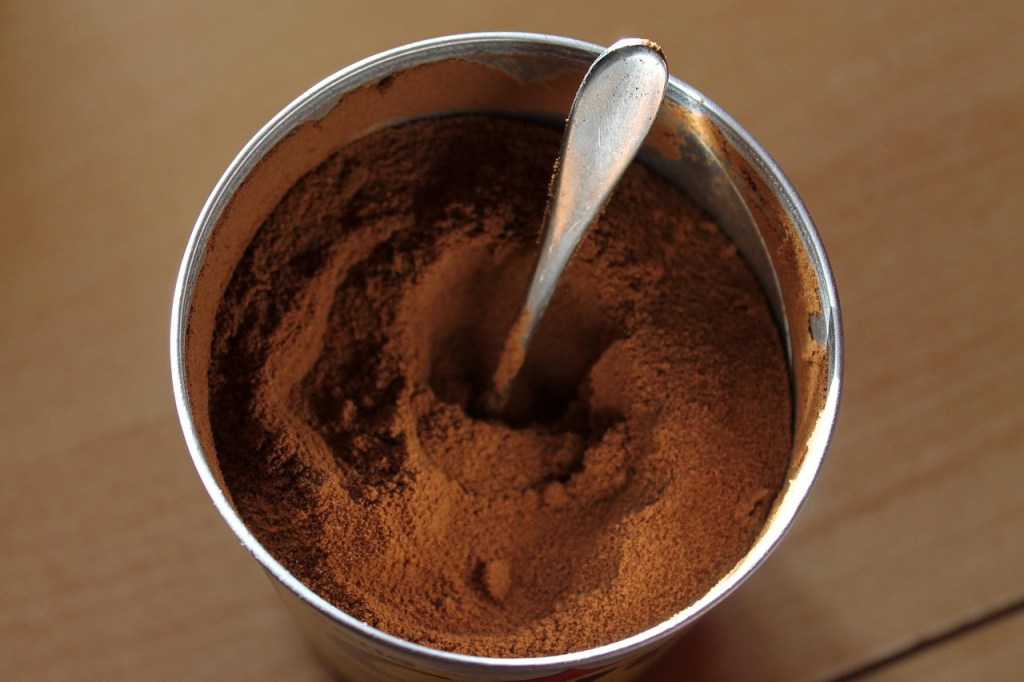
In my attempt to reduce ultra-processed foods, I had an issue: How do I find a suitable protein powder replacement that is not ultraprocessed.
During my research I learned that Steeve Reeves – one of the golden era bodybuilders used to make his own protein shakes using cooking powders found at home. I used these research sources for much of the information about different proteins: https://pmc.ncbi.nlm.nih.gov/articles/PMC3905294/ https://pmc.ncbi.nlm.nih.gov/articles/PMC3497008/
This consists of 2 parts milk powder, 2 parts egg white powder and 1 part soy powder.
The nutritional value of milk powder per 100g is: 0.3g sat fats, 38g sugars, 47g protein.
70-90% of the milk protein is casein. Similar to whey, casein is a complete protein and also contains the minerals calcium and phosphorous.An attractive property of the casein micelle is its ability to form a gel or clot in the stomach. The ability to form this clot makes it very efficient in nutrient supply. The clot is able to provide a sustained slow release of amino acids into the blood stream, sometimes lasting for several hours (Boirie et al. 1997). This provides better nitrogen retention and utilization by the body.
The nutritional value of egg white powder per 100g is: 0g sat fats, 0g sugars, 84.1g protein. Fifteen grams of egg white protein contain 1341 mg of leucine (Leu), 837 mg of isoleucine (Ile), and 1096 mg of valine (Val), and there is also an abundant source of branched amino acids (BCAA) and aromatic amino acids (AAA). Recent data showed that Leu induces a maximal skeletal muscle protein anabolic response in young adults [12], which suggests that Leu-rich egg white protein intake might have an important effect on body mass accretion.
The nutritional value of soy flour per 100g is: 0g sat fats, 11g sugars, 37.8g protein. Soy is a complete protein with a high concentration of BCAA’s. There have been many reported benefits related to soy proteins relating to health and performance (including reducing plasma lipid profiles, increasing LDL-cholesterol oxidation and reducing blood pressure), however further research still needs to be performed on these claims. The flour version contains fibre, the isolate does not. Isolates are the most refined soy protein product containing the greatest concentration of protein, but unlike flour and concentrates, contain no dietary fiber. Isolates originated around the 1950s in The United States. They are very digestible and easily introduced into foods such as sports drinks and health beverages as well as infant formulas.
This means that per 100g the mixture I made has 0.12g sat fats, 17.2g sugars (15.2 + 2.2 +0), 60g protein (18.8 + 33.64 + 7.56).
This means that the protein level is insufficient compared to modern commercial protein powders. To solve this and improve my formula, I decided to mix a further 200g of egg white powder into this mixture.
This results in a protein powder per 100g containing 65.1g protein, 13.7g sugar and 0.1g sat fats.
Therefore, 1 scoop (24grams) of the mixture contains: 15.62g protein, 3.29g sugar, essentially 0g sat fats. Cacao powder can be added in addition for taste.





 Diary of a Medic
Leave a comment