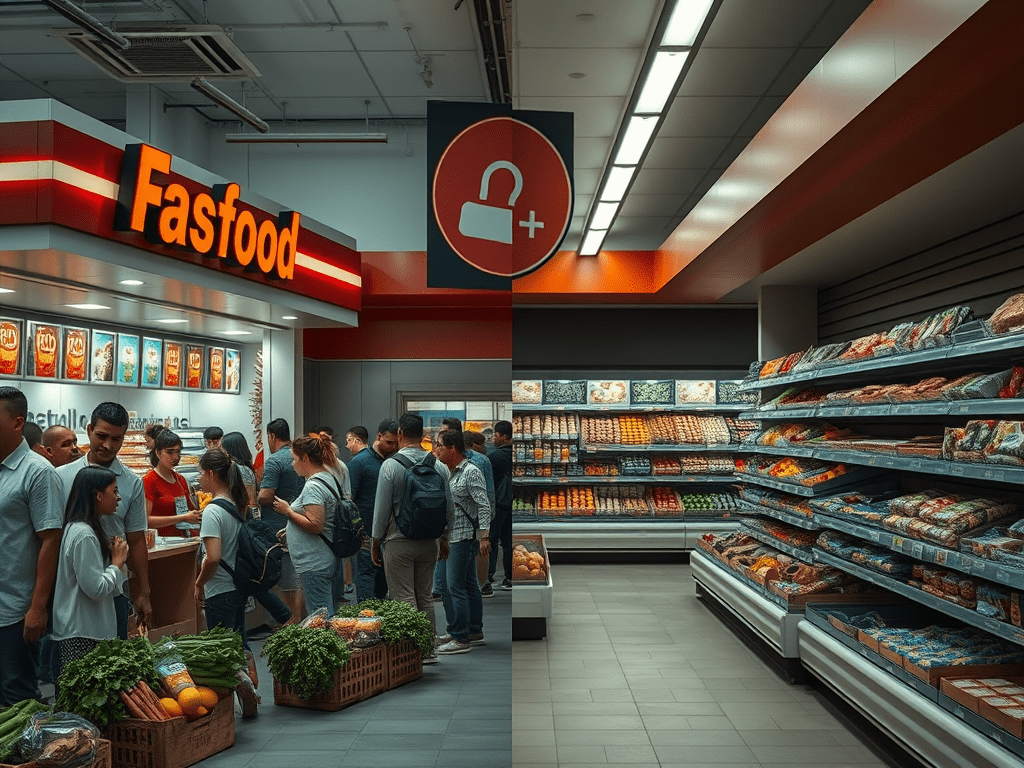
Obesity prevalence in the UK is worsening—and perhaps more concerningly, it’s affecting people at younger ages than ever before. As a result, we are seeing a rise in serious complications linked to obesity, including Type 2 Diabetes.
At the same time, access to fast food has never been easier. Fast food is popular for a reason—it’s quick, convenient, and, yes, it tastes good. This isn’t about condemning the occasional burger or takeaway. But it is about raising awareness: overconsumption, especially when combined with sedentary lifestyles, can lead to significant long-term health problems.
My Background
I’ve been a doctor for 12 years, with the last 7 spent working in general practice. Much of my work has been in areas where health inequalities are prominent, including communities with a high South Asian population—groups already at increased risk of metabolic diseases.
What I’m Seeing on the Ground
Year after year, I’ve noticed a worrying trend:
- Rising levels of obesity
- Patients being diagnosed with type 2 diabetes at younger ages
- Increasingly sedentary lifestyles
At the same time, fast food outlets are becoming more common, and unhealthy food is more accessible than ever—especially with the rise of delivery apps.
Healthy eating, by contrast, often requires more effort. It’s typically more expensive and demands time for preparation—something many people simply don’t have.
The Bigger Picture: Fast Food and Deprivation
Recent UK government data highlights a concerning link between fast food availability and deprivation. According to the UK Government Wider Determinants of Health profile:
- Local authorities are responsible for neighbourhood planning, licensing food premises, and public health.
- Areas with higher deprivation tend to have more fast food outlets per 100,000 people.
- Obesity rates increase with deprivation.
- Fruit and vegetable consumption decreases as deprivation rises.
This paints a clear picture: the environments people live in significantly shape their health choices.
The Data Behind the Concern
According to the NHS Digital Health Survey for England (2019):
- 68% of men and 60% of women are overweight or obese
- Obesity increases with age (up to 75 years)
- Among children, 18% of boys and 13% of girls are obese
- Children with obese parents are more likely to be obese
Source:
https://digital.nhs.uk/data-and-information/publications/statistical/health-survey-for-england/2019
Why This Matters: The Health Risks of Obesity
Obesity is not just about weight—it’s linked to a wide range of serious health conditions, including:
- Type 2 diabetes
- High blood pressure
- Coronary heart disease and stroke
- Asthma
- Metabolic syndrome
- Certain cancers (including bowel, breast, and womb cancer)
- Gastro-oesophageal reflux disease (GORD)
- Osteoarthritis
- Sleep apnoea
- Liver and kidney disease
- Fertility issues and pregnancy complications
Source:
https://www.nhs.uk/conditions/obesity/
What Can We Do?
As a GP, I often feel limited in what I can achieve within a 10-minute consultation. Patients have varying levels of motivation, and meaningful lifestyle change takes time and support.
This raises some important questions:
- Should doctors step beyond the consultation room?
- Could we collaborate more closely with public health teams?
- Are group consultations part of the solution?
- Would community health promotion events make a difference?
The reality is that general practice is already stretched. Taking GPs out of clinics to focus on prevention has consequences for patient access and care.
But doing nothing isn’t an option either.
Final Thoughts
The link between fast food availability, deprivation, and obesity is becoming increasingly clear. This isn’t just about individual choice—it’s about environment, accessibility, and inequality.
If we want to tackle obesity effectively in the UK, we need a broader, community-level approach alongside individual care.
If you have ideas, insights, or solutions—especially around community health initiatives—I’d love to hear from you.




 Diary of a Medic
Leave a comment